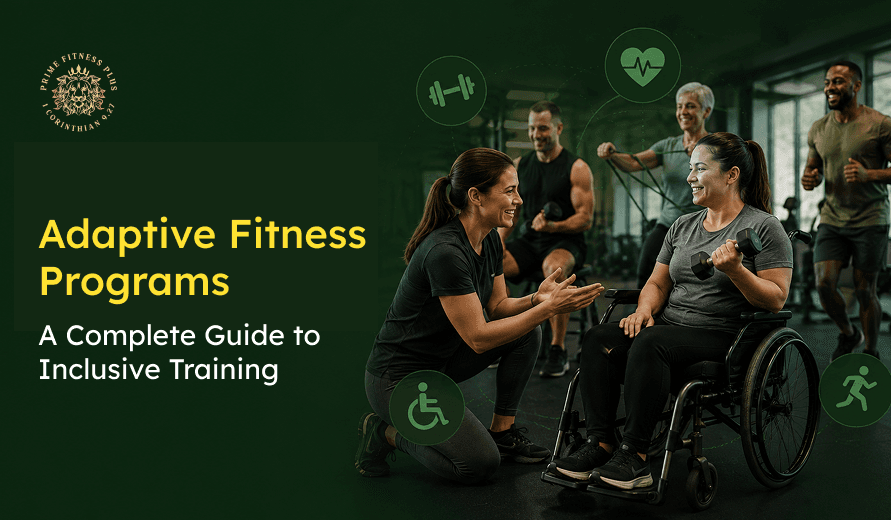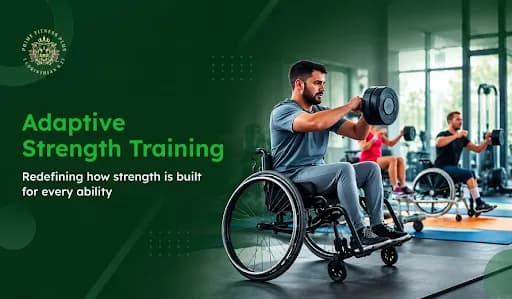
Strength training is not limited to people who can stand, walk, lift heavy weights, or use standard gym equipment. Adaptive strength training changes how strength training is planned so people with different physical abilities can participate safely and with purpose. The focus is not on comparing one person with another. It is on choosing movements, equipment, resistance, and positions that suit the person doing the exercise.
For someone who uses a wheelchair, has limited mobility, lives with a neurological condition, has a limb difference, or needs extra support with balance, traditional gym routines may not always be practical. Adaptive strength training offers an alternative path. Exercises can be performed while seated, supported, standing, or with modified equipment. The goal is to build usable strength to support daily activities, movement, posture, and confidence.
Why Adaptive Strength Training Matters
Strength supports many tasks performed outside a gym. Getting out of a chair, transferring from a wheelchair to another surface, reaching for an object, carrying groceries, opening a door, maintaining posture, or using mobility equipment can all require muscular effort.
Regular resistance exercise may also support bone health, muscle function, balance, joint stability, and physical independence. For people with disabilities, these benefits can be especially important because daily movement may require more effort or rely heavily on certain muscle groups.
Strength training can also provide a sense of progress. A person may start with light resistance and later perform more repetitions, control a movement for longer, use a different resistance level, or complete a daily task with less fatigue. Progress need not mean lifting a heavier weight. Better control, improved range of motion, stronger posture, and greater confidence can all be meaningful signs of progress.
For people seeking inclusive fitness programs, strength training can offer a practical way to participate in physical activity without relying on a one-size-fits-all workout.
How Adaptive Strength Training Works
A good adaptive workout begins with the person, not the exercise list. Before choosing movements, a trainer should consider mobility, balance, coordination, range of motion, pain, fatigue, prior exercise experience, available equipment, and personal goals.
The next step is to select a starting position. Depending on the person, this may be seated in a wheelchair or a stable chair, standing with support, lying down, or in another secure position.
Resistance is then set to a level that allows controlled movement. The workout may use slow repetitions, short sets, rest periods, and gradual increases in resistance. A trainer can also modify the range of motion or the direction of a movement when a standard version is not suitable.
This is where adaptive exercise programs can be useful. Rather than asking every participant to perform the same movement, the program can use different exercise positions, resistance levels, equipment choices, and movement patterns tailored to individual ability.
Examples of Adaptive Strength Exercises
Upper-Body Exercises
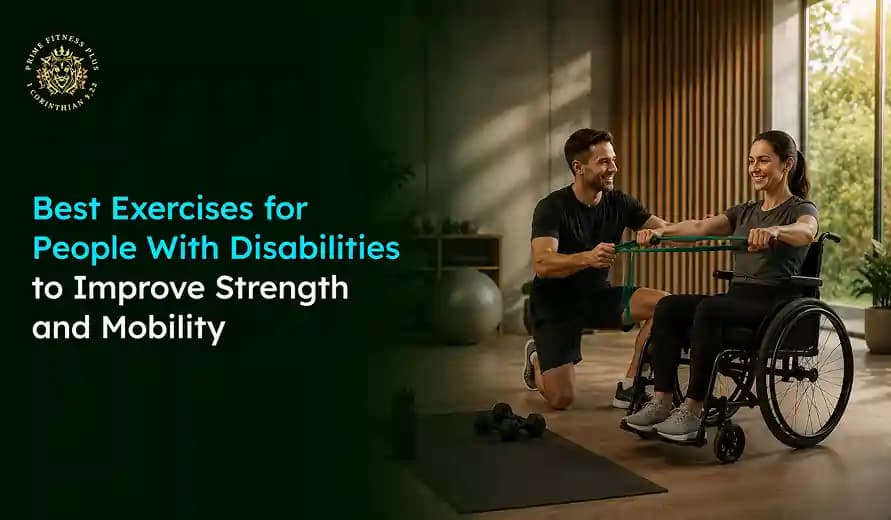
Seated chest presses, resistance-band rows, biceps curls, triceps extensions, shoulder raises, and supported overhead presses can help train the arms, shoulders, chest, and back. These exercises can often be performed from a stable seated position.
For wheelchair users and people with limited lower-body mobility, upper-body strength plays an important role in daily activities. Reaching, pushing, pulling, transferring, and using mobility equipment can require strength in the shoulders, arms, chest, and back.
Core and Trunk Exercises
Core training does not always require floor exercises. Seated reaches, controlled trunk rotations, supported anti-rotation exercises, and resisted holds can train the muscles that help keep the torso stable.
Good trunk control supports sitting posture and movement during daily tasks. The appropriate exercise depends on the person's current ability, balance, range of motion, and health needs.
Lower-Body Exercises
Depending on a person's mobility and medical guidance, options may include seated knee extensions, supported sit-to-stand practice, leg presses, ankle movements, or resistance-band exercises.
Lower-body training can be particularly useful for people who can safely perform supported standing or weight-bearing exercises. For others, seated or assisted exercises may be a better starting point.
Functional Strength Exercises
Functional fitness training integrates strength training with everyday movements. A session might include repeated sit-to-stand practice, reaching and carrying tasks, resistance-based pushing or pulling, wheelchair propulsion drills, or supported transfers.
The exercise is selected because it aligns with a real-world movement goal. This can make strength training more meaningful for someone who wants to improve a specific daily activity rather than simply increase gym performance.
Adaptive Equipment That Can Help
Adaptive strength workouts do not always require specialised gym machines. Resistance bands are useful because they come in different resistance levels and can be anchored at several positions. Dumbbells can be used when grip is sufficient. Cuffs, straps, padded handles, and larger grips may help people who have difficulty holding conventional equipment.
Stable chairs, benches, support rails, and transfer-friendly spaces can also make workouts more practical. Wheelchair users may need sufficient clear floor space to position the chair safely and move the arms without hitting nearby objects.
The best equipment is not necessarily the most expensive. It is the equipment that allows a person to perform the movement with suitable control and comfort.
Safety Considerations for Adaptive Strength Training
Safety should come before intensity. A person beginning a strength program should use a stable setup and start with a resistance level that allows controlled movement. Sudden increases in weight, speed, or training volume can place unnecessary stress on muscles and joints.
Pain, dizziness, unusual shortness of breath, loss of balance, or other concerning symptoms are reasons to stop and seek appropriate medical advice. People with medical conditions, recent surgery, significant pain, or new physical symptoms should consult a qualified health professional before starting or changing an exercise program.
A qualified adaptive fitness trainer can also help identify practical exercise variations and monitor technique. The trainer should understand disability-related movement needs rather than simply reducing the weight in a standard workout.
Building a Strength Program Around Real Goals
A strong adaptive program should have a clear purpose. One person may want to improve transfer strength, while another may want better wheelchair propulsion, stronger arms for daily tasks, improved posture, or greater general fitness.
Training can be organised around major movement patterns, including pushing, pulling, reaching, lifting, carrying, rotating, and lower-body movements, when appropriate. Sessions can include a warm-up, several strength exercises, rest periods, and a short cool-down.
Progress can be measured in several ways. A person may perform more repetitions at the same resistance, use a higher resistance, maintain better form, complete more of a movement, or recover more comfortably between sets. Tracking these changes gives the person and the trainer a clear picture of progress.
For individuals seeking personalised fitness programs, these measurements can help trainers adjust exercise selection and training volume as abilities and goals evolve.
Who Can Benefit From Adaptive Strength Training?
Adaptive strength work can be suitable for many people with different abilities. This may include:
- Wheelchair users
- People with spinal cord injuries
- Individuals with limb differences
- People with cerebral palsy
- Adults with neurological conditions
- People recovering from injury
- Individuals with limited mobility
- People who need seated exercise options
- Adults who find conventional gym workouts difficult to access
The right program depends on a person's current abilities and health status. There is no single exercise plan that works for everyone with the same diagnosis. Two people with the same condition may have very different strength, mobility, endurance, coordination, and goals.
Disability fitness programs can address these differences by offering exercise options that account for mobility, equipment access, physical limitations, and individual goals.
Adaptive Strength Training at Prime Fitness Plus
Prime Fitness Plus focuses on inclusive fitness and adaptive exercise support for people who may not feel represented by conventional gym programs. An adaptive fitness professional can help assess movement needs, select appropriate exercises, and build a routine around meaningful goals.
For clients who need disability-focused wellness support, the process can include strength training, functional movement, mobility-focused exercises, and adjustments for available equipment or home settings. This approach can make strength training more approachable while keeping the focus on the person's abilities and goals.
For people considering inclusive fitness programs, working with a provider who understands disability-related movement needs can make it easier to find exercise options that suit their circumstances.
If you are considering adaptive personal training, look for a provider who understands accessibility, disability-related movement needs, and safe exercise progression. Ask how the trainer adapts exercises, what equipment is available, and how progress will be tracked.
Getting Started With Adaptive Strength Training
Starting does not require a complicated routine. Begin with a few movements that match your current ability. Use manageable resistance, practise controlled repetitions, and allow adequate recovery between sessions.
It can help to write down the exercises, resistance, repetitions, and how the session felt. Over time, this record can show which movements are becoming easier and where adjustments may be needed.
A trainer can also help determine whether seated exercises, supported standing movements, resistance bands, weights, machines, or bodyweight exercises are appropriate. The starting point should reflect the person's current physical ability rather than an expected fitness level.
Most importantly, strength should be seen as a personal process. The goal is not to copy someone else's workout. The goal is to build the physical capacity needed for your own life.
Final Words
Adaptive strength training makes strength work more accessible by changing the exercise around the person rather than expecting the person to fit a standard workout. With suitable positions, equipment, resistance, rest periods, and movement choices, people with many different abilities can take part in strength training.
Whether the goal is stronger transfers, better posture, improved daily function, greater wheelchair control, or general fitness, a well-planned adaptive program can provide a practical path forward. With guidance from qualified professionals and steady practice, strength can be built in many forms—and every person's progress can look different.